The federal solar tax credit for homeowners ended in 2025. For businesses, the picture is very different. Commercial solar still qualifies for a 30% federal tax credit, bonus adders that can push it higher, and accelerated depreciation that writes off most of the system in the first year. For many Florida businesses, 2026 is a window worth taking seriously.
The commercial credit is still here
While the residential credit expired at the end of 2025, the commercial Investment Tax Credit (ITC) for solar is still in force. The base credit is 30% of a qualifying system's cost, covering both equipment and labor. From there, several bonus adders can stack on top, each worth an additional 10% of the system cost:
- Domestic content, for using a qualifying share of U.S.-made equipment.
- Energy community, for projects in designated areas such as former industrial or fossil-fuel sites.
- Low-income community, for projects in qualifying areas.
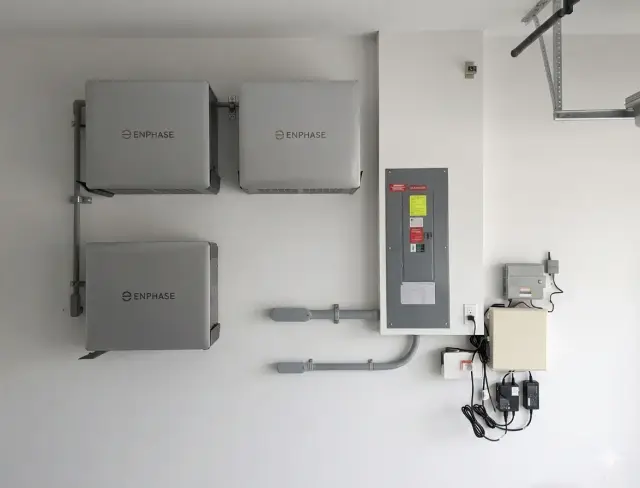
A project that meets one or more of these can move the federal credit well past 30%. Batteries qualify too, whether paired with solar or installed on their own, and tax-exempt organizations such as nonprofits and municipalities can now receive the credit as a direct payment rather than a tax offset.
How accelerated depreciation works
Solar equipment is treated as 5-year MACRS property under the Modified Accelerated Cost Recovery System, so its cost is recovered over roughly six tax years on an accelerated schedule that front-loads the deductions into the early years of ownership.
There is one wrinkle worth understanding. When you claim the 30% ITC, your depreciable basis is reduced by half the credit amount, which leaves about 85% of the system's cost available to depreciate. On top of that, 100% bonus depreciation may apply, allowing the entire depreciable amount to be deducted in a single year rather than spread across the schedule.
Put together, the effect is substantial. Take an illustrative $500,000 installation:
- The 30% ITC recovers about $150,000.
- First-year depreciation on the remaining basis adds tens of thousands of dollars more in deductions.
- After both, the net cost often lands around 45% to 55% of the sticker price, which works out to roughly $225,000 to $275,000 in combined tax benefits on that example.
Your actual result depends on your business's tax position, so treat these figures as a model rather than a promise, and run the numbers with your accountant.
What that looks like in practice
- Lower operating costs immediately. Solar offsets one of a building's largest recurring bills, and that saving lands every month for decades.
- A hedge against rate increases. Locking in your energy cost protects your margins as utility rates climb.
- Strong after-tax returns. Between the credit and first-year depreciation, the effective payback for a well-sited commercial system is often far shorter than the raw sticker price suggests.
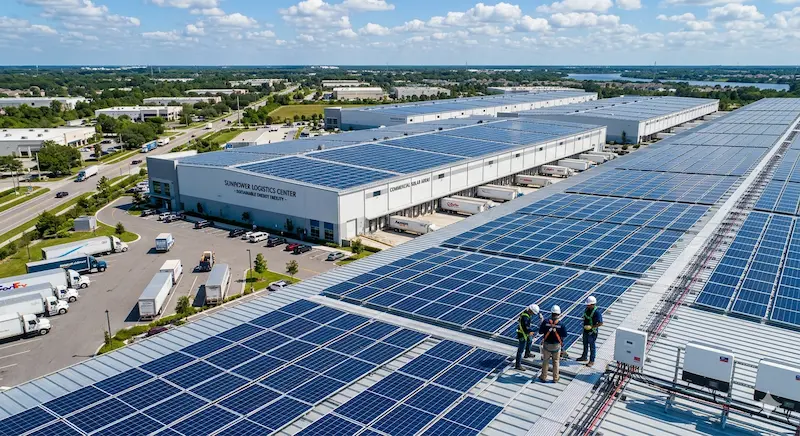
- Flexible mounting. Rooftop, ground-mount, and carport systems all qualify, which suits warehouses, agricultural operations, retail, and office sites alike.
Who this is a fit for
Commercial solar tends to make the most sense for businesses with meaningful daytime electricity use and enough roof, land, or parking area to host an array: manufacturing and warehousing, agriculture, retail centers, medical and office buildings, and similar. If your business has the tax appetite to use the credit and depreciation, the economics get even better.
Why timing matters
The one thing not to count on is unlimited time. Federal clean-energy incentives are on a phase-down path, and the rules carry specific deadlines tied to when a project begins construction and when it is placed in service. Those details are involved, and they are changing, so the safe assumption is that today's benefit will not be there indefinitely. If solar is on your radar, 2026 is the year to map out your timeline while the full benefit is on the table.
How we approach a commercial project
Solar is an electrical project first, and commercial work raises the stakes. Interconnection, load, structural, and code considerations all matter. Every May Electric project is designed and installed in-house under licensed master-electrician oversight, and we manage the whole process: engineering, permitting, utility interconnection, installation, and inspection. We will model the after-tax return for your specific building and usage so you can make the call with real numbers.
The bottom line
For Florida businesses, the combination of a 30% federal credit, stackable bonus adders, first-year depreciation, and rising utility rates makes 2026 a genuinely strong time to evaluate solar, and the incentive window will not stay open forever. Request a free commercial assessment and we will build the numbers around your property. Curious how the savings flow month to month? Net metering explains the mechanics.
This article is general information, not tax, accounting, or legal advice. Federal incentives, eligibility, bonus adders, and deadlines are complex and subject to change, and depreciation treatment depends on your business's situation. Consult a qualified tax professional before making decisions based on current incentives.