If you were planning to start a commercial solar project before July 4, 2026 and the date slipped past, you have not missed your chance at the federal tax credit. The rules give you a second path, and for most Florida businesses it is a clear, workable one.
The deadline passed. The credit didn't.
July 4, 2026 was the date to begin construction on a commercial solar project under one set of the federal rules. If that date came and went, here is the good news: you have not lost the 30% federal Investment Tax Credit. There is a second way to qualify, and it is still wide open.
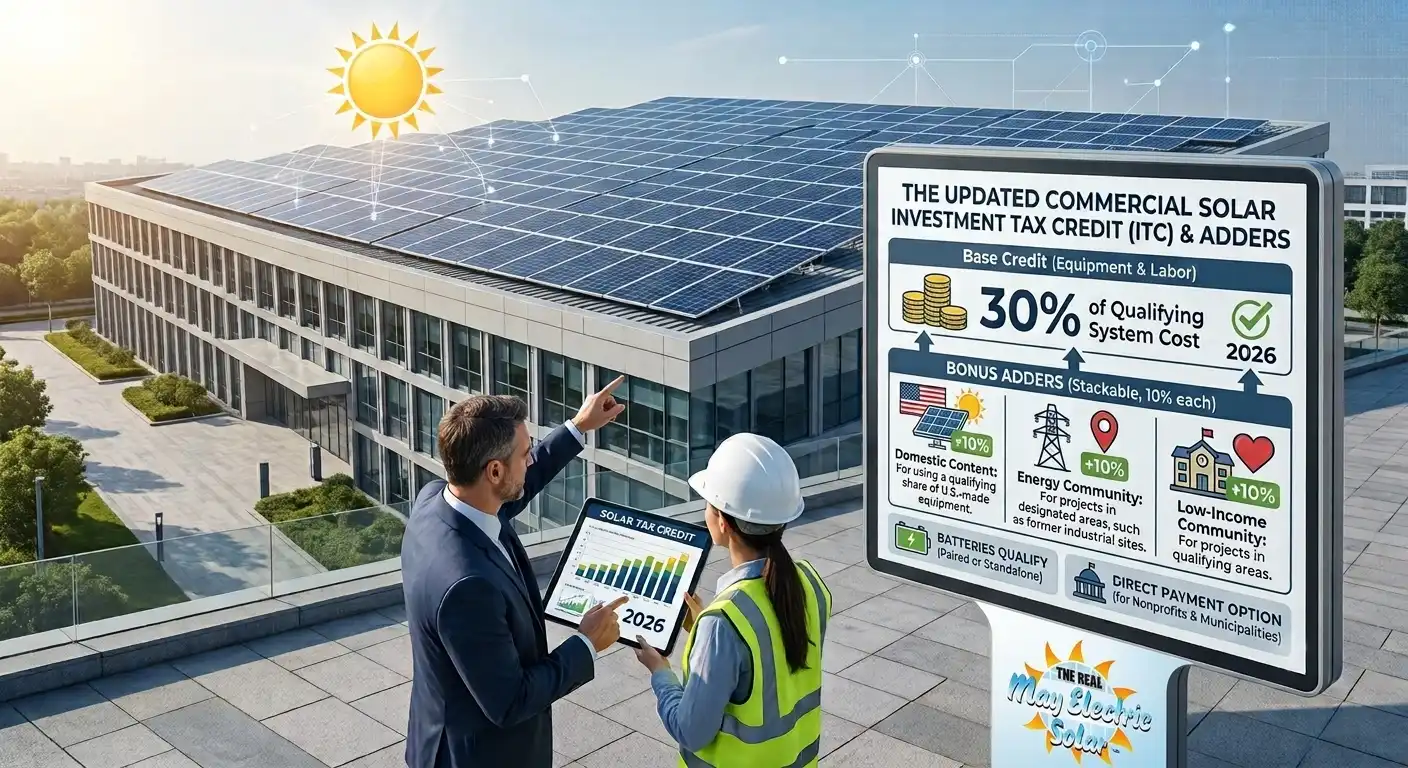
As long as your system is placed in service by December 31, 2027, it can still earn the full 30% credit, along with the same bonus adders and accelerated depreciation that make commercial solar so strong on an after-tax basis.
Two ways to qualify, and you still have one
Federal law set up two separate paths for a commercial solar project to lock in the credit:
- Begin construction by July 4, 2026, or
- Place the system in service by December 31, 2027.
The first window has closed. The second is the one that matters now, and it is still available to you. Meet that placed-in-service date and the 30% base credit stays on the table, plus the stackable bonus adders and the first-year depreciation. For the full breakdown of how the credit and depreciation work together, see How the 2026 Commercial Solar Tax Credit Works.
What "placed in service" actually means
This is the part that trips people up. "Placed in service" is not the day you sign a contract or the day the panels show up on a truck. It is the point where the system is fully installed, inspected, and operational, usually when the utility grants permission to operate and the array begins producing power.
That distinction matters because a project finishing at the end of 2027 is not a late-2027 project. It is one that needs to be moving well before then.
Why the runway is shorter than it looks
A commercial solar installation is a sequence of steps, and several of them depend on parties you do not control:
- Engineering and structural review to confirm the building or site can carry the array.
- Permitting with the local authority.
- Equipment procurement, which can run on real lead times for panels, inverters, and switchgear.
- Utility interconnection, where application review and approval queues can stretch out, especially for larger systems.
- Installation and final inspection, then permission to operate.
Each of these takes weeks to months, and they run partly in sequence. Add them up and a comfortable path to a 2027 placed-in-service date means starting in 2026, not waiting until the deadline is in sight.
How we keep projects on schedule
Solar is an electrical project first, and commercial work raises the stakes. Every May Electric project is designed and installed in-house under licensed master-electrician oversight, and we manage the whole process: engineering, permitting, utility interconnection, installation, and inspection. We build the schedule backward from the deadline, so you can see exactly what has to happen and when to stay inside the window.
The bottom line
Missing the July 4 begin-construction date is not the end of the opportunity. The 30% credit is still available for commercial systems placed in service by the end of 2027, but the clock is real and the work ahead takes months. Request a free commercial assessment and we will map a timeline from today to a 2027 placed-in-service date, with the after-tax numbers for your building.
This article is general information, not tax, accounting, or legal advice. Federal incentives, eligibility, bonus adders, and deadlines are complex and subject to change, and depreciation treatment depends on your business's situation. Consult a qualified tax professional before making decisions based on current incentives.